Queen of France and Devoted Mother. Why Marie Antoinette was so hated.
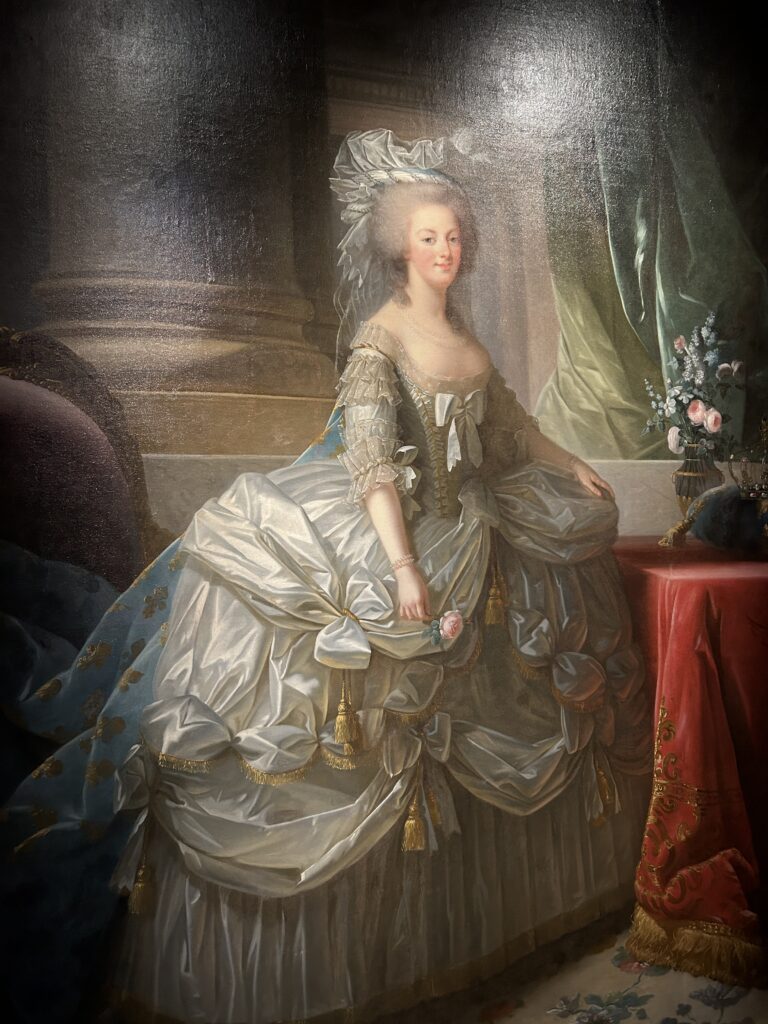
Although barely featured in The Power of the Wouivre: Revolution, Marie Antoinette, Queen of France and alleged perpetrator of the immortal lines “let them eat cake”, when told about the plight of starving Parisians without bread, nonetheless deserves a mention here. Let’s address that quote first. The true phrase was in fact more correctly, “qu’ils mangent le brioche” sometimes translated as “let them eat pastry”, and was quoted by Jean-Jacques Rousseau in his Confessions where he told the story of a certain princess who made that very remark on hearing of the lack of bread among the peasantry. The issue here being that Rousseau wrote his Confessions between 1765 and 1769 (published 1782) when Marie Antoinette was not yet Queen, and the first major bread shortage in France during Marie Antoinette’s reign was in 1775. Moreover, a similar phrase – “if there is no bread, let the people eat the crust”- was ascribed to the wife of Louis XIV nearly a century prior. Attributing it to Marie Antoinette was therefore certainly a piece of slanderous propaganda of a phrase frequently attributed throughout history to royal women and used to smear the character of Marie Antoinette.
The reality of the situation is that Marie Antoinette was in fact a victim of circumstance on the vast political chessboard constructed by her mother, the formidable Empress Maria Theresa of the Hapsburg Empire. Marie Antoinette was the Empress’ 15th child and youngest girl and as such was not considered particularly valuable to the family. Her mother put her down regularly as a young teen for her lack of classic good looks – crooked teeth (that she later had straightened in 3 months using a brand new wire method of the time), an “aqueline” nose and high forehead that were considered less than fashionable, and a naturally pouty lower lip that was described as giving an air of distain incompatible with her affable nature. She was also uneducated. At 13, she was an accomplished dancer and musician but was unable to read and write. Even her spoken French was considered coarse, although lessons were subsequently given to bring her to almost fluency by the time of her appointment as Dauphine of France. Her lack of appropriate supervision as a child resulted in a lack of concentration as a teen and adult.
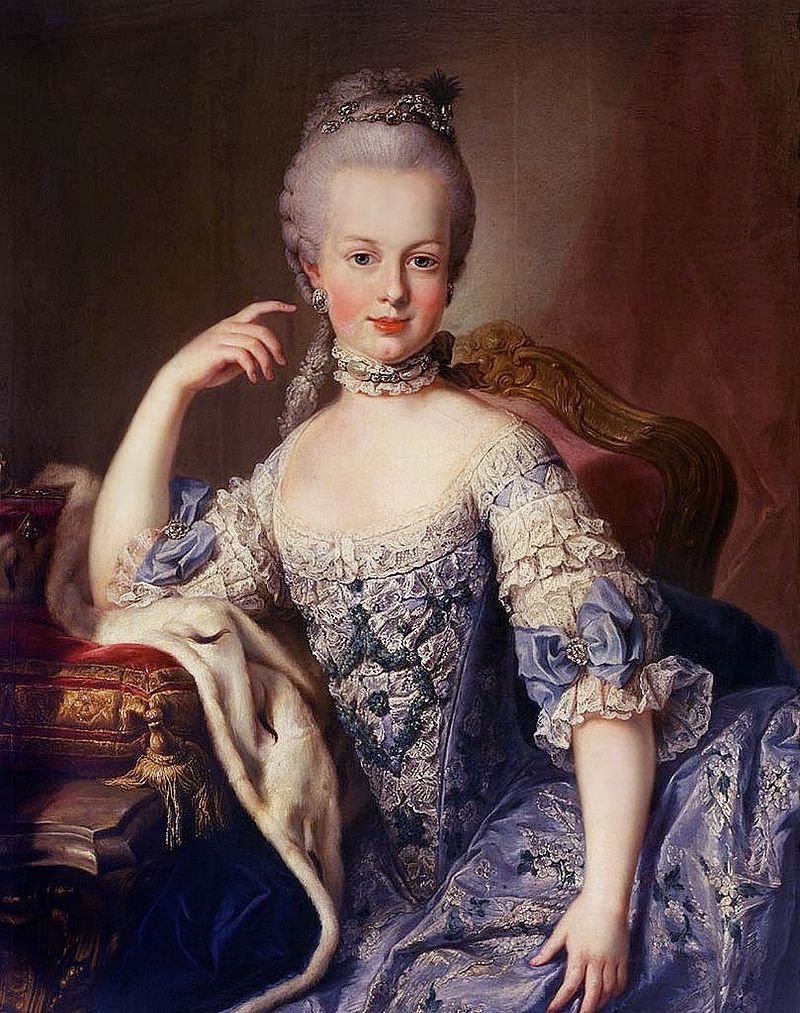
Unfortunately for Marie Antoinette, she lost two sisters to small pox within a short period of time, and after both girls’ marriage contracts had already been drawn up. The next available two sisters were thus pawned off to replace the marital gaps, leaving a potential union with France exposed and open for Marie Antoinette to fill. She was just 12 years old at the time.
There then began a concentrated effort to ready the young girl for her future appointment as Queen of France. On 6th June 1769, when Marie Antoinette was 13, a formal betrothal application was made and in February 1770, on the first day of her first period (aged 14) she was announced as ready to wed the current Dauphin Louis-Auguste and to be mother to the subsequent Dauphin of France. She was given a proxy marriage in April the same year (with her own brother standing in for the sake of the ceremony), as was customary at the time, so that she would officially be Dauphine on arrival on French soil. She was then sent to France the following month. This was intended to be a permanent departure from her family and homeland.
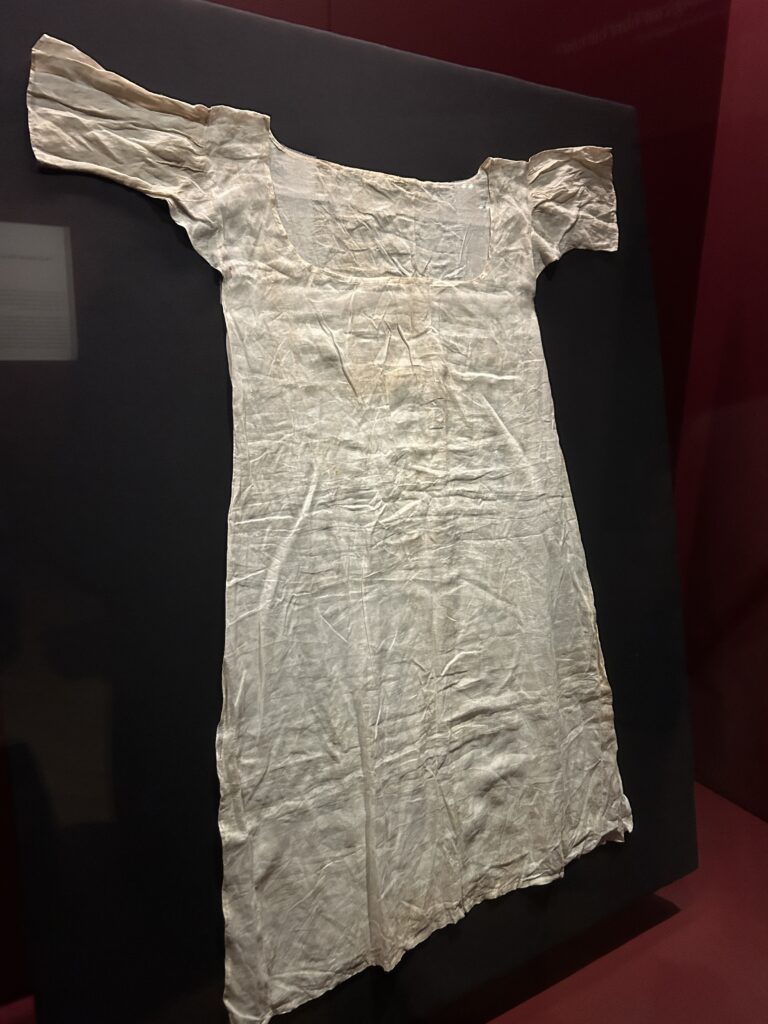
The ritual was further cemented in an official handover on an island in the Rhine river, where she was publically stripped naked and dressed in French attire, leaving her Austrian clothes in a heap where they lay (remember she was just 14 at the time). Whilst she would have been used to a certain lack of privacy when dressing, this ritual, more public than even she would have been used to, would have been humiliating for the young teen, not least because it signified a complete transformation from everything Austrian to French. She was not even allowed to take her own ladies-in-waiting or her treasured pug on with her to France.
Confusingly, despite this elaborate ritual and despite France not being enamoured with an Austrian match, Marie Antoinette was advised by her mother that even though she should not introduce German customs or cite any of the Austrian courtly ways when she arrived at the French Court, nonetheless she should still be a “good German”. In fact the Empress’ constant interference in her daughter’s comportment in France was probably one of the things that contributed to her fall from grace later on.
Loyal Wife and Loving Mother
In the beginning, Marie Antoinette was beloved of the French people. By time she was Queen she had grown into a radiant beauty but more than that she had a kind soul, as evidenced from various letters from Florimond Mercy, Count d’Argenteau to the Empress Maria Theresa of Austria who had sent the Count to France to advise and basically keep an eye on Marie Antoinette. From these letters, detailing how Marie Antoinette had stopped her carriage for over an hour to help an injured civilian, or her kindness to children, ensuring they were all always welcomed in Versailles, to the Dauphine’s own letters to her mother acknowledging her priviledge and expressing her gratitude that the people of France could show such love despite their own hardships, Marie Antoinette’s kindness shone through. She was in fact the only member of the royal party that refused to ride directly over the peasants’ cornfields in order to not ruin their crops.
She was also a loyal wife, despite the fact that she and Louis were only 14 and 15 years old when they married and did not consumate the marriage for 3 years. In fact in the early years they behaved much like the children they were, instead of a royal couple, playing games and just generally enjoying the space of the palace of Versailles. After the October Days – or Women’s March on Versailles – in 1789, Marie Antoinette was given the option to flee with her children but chose to stay with her husband and King. Even then, after the King and Queen were practically under house arrest at the Tuilleries, Marie Antoinette, whilst regarded with suspicion, was still loved as a queen.
7 years after their marriage, Marie Anoinette finally fell pregnant. As further proof of her kindness and love of children, to make her news public Marie Antoinette chose to send money to those who were imprisoned for failing to pay their children’s wet-nurses. Unfortunately pamphleteers, already profiting from satirical propaganda regarding the king’s impotence and inability to impregnate Marie Antoinette, decided to speculate on the father of Marie Antoinette’s baby instead of publicising the Queen’s generosity. This was the beginning of a propaganda campaign that ultimately scapegoated the Queen for public hatred against the monarchy.
A reviled queen, an extravagent spendthrift and a foreign scapegoat.
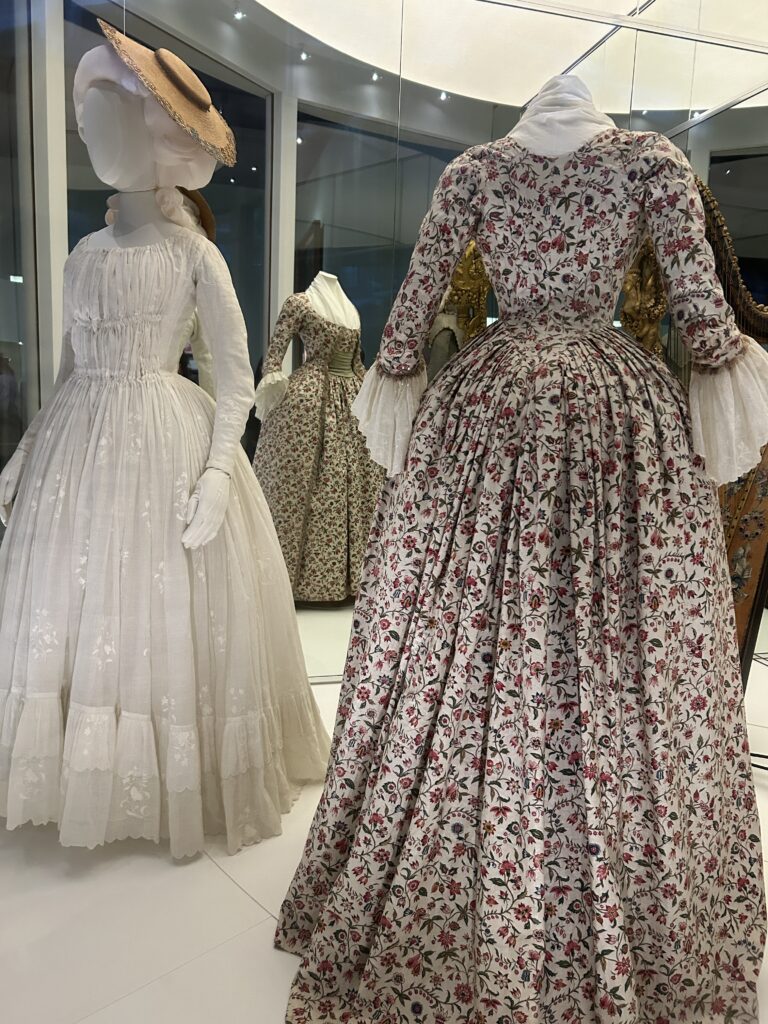
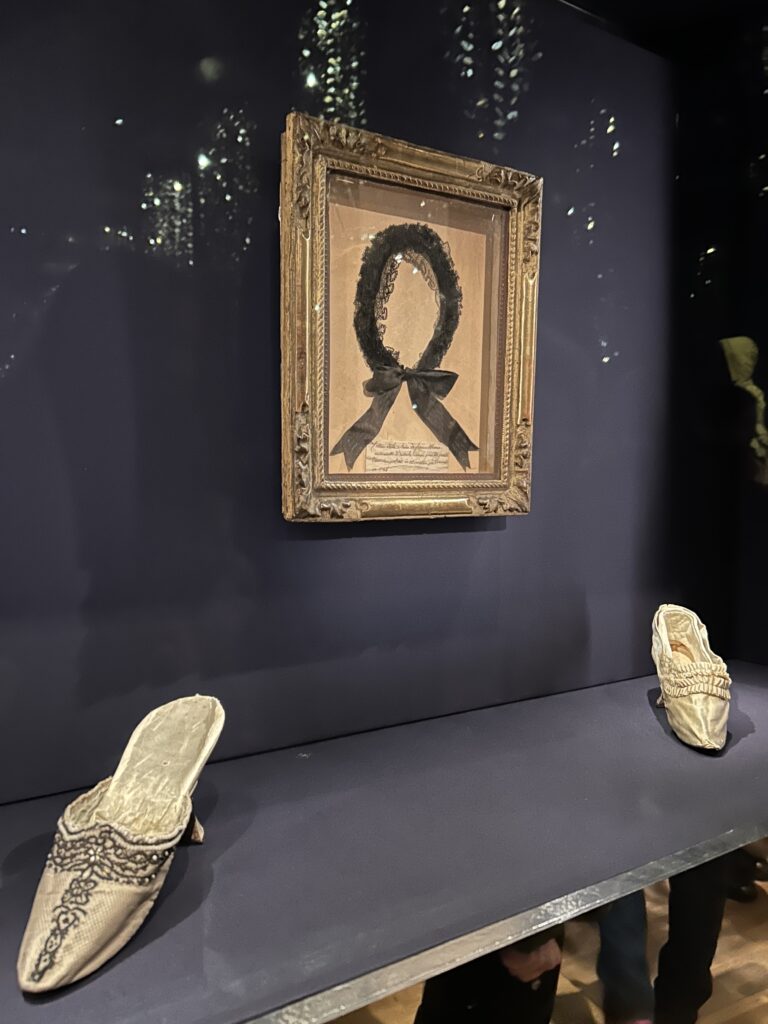
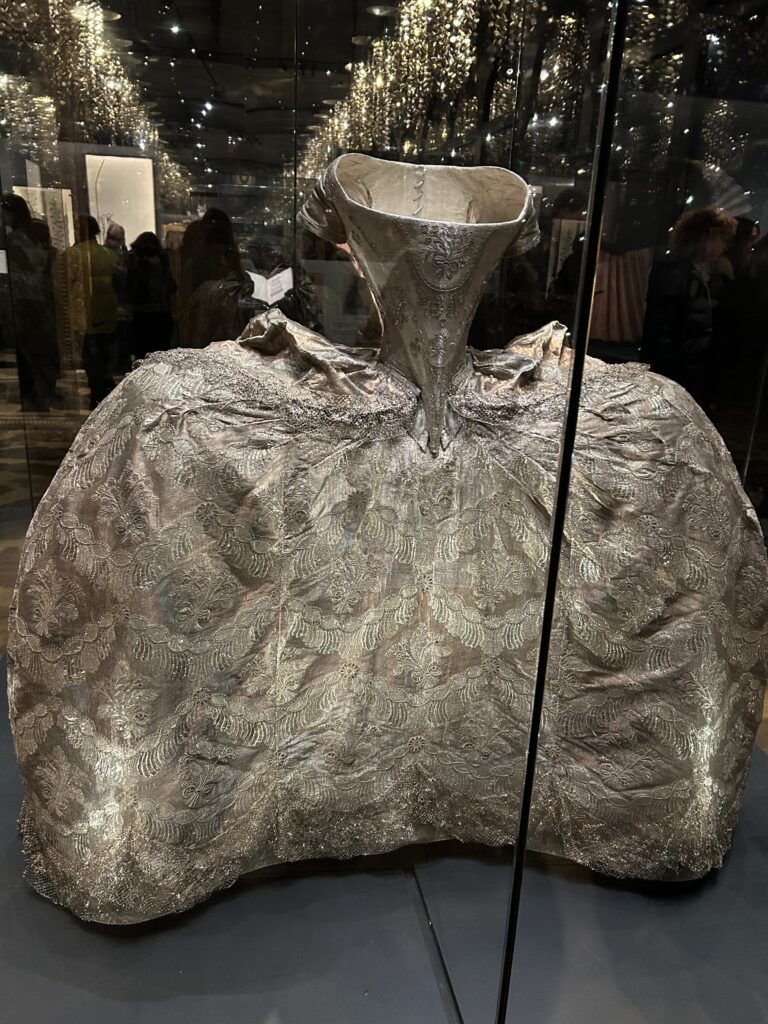
It was not just their young age that prevented an heir from being conceived initially. Louis XVI seemed disinterested in the act altogether. He was the first King of France not to take an official mistress. Marie Antoinette filled her lonliness with shopping and gambling, incurring huge debt in a country already in signficant financial trouble. Her love of fashion became her trademark. She was, however, not the sole perpetrator of extravagance among the royal circles but as a foreigner, she became the scapegoat.
This was further exacerbated by propaganda regarding Marie Antoinette’s influence on Louis XVI. It was suggested that she manipulated him, taking advantage of his weak and indecisive nature for her own gains. This was an entirely false supposition as there were several occasions when it was clear that Louis would not be swayed by his wife’s advice. From the beginning, Marie Antoinette was clearly not interested in politics but her mother, continually made it clear that it was part of her duty as the pawn in an Austrian-Franco alliance, to exercise gentle persuasion in diplomatic negotiations. This would usually have been the role of mistress but as Louis had none, Empress Maria Theresa took advantage to have Count Mercy push her daughter into that role, as well as being Queen. Marie Antoinette’s failure to succeed on these matters was worse than being seen to attempt to manipulate the king. Her attempts to remind Louis of his obligations to support Austria during war of Bavarian succession, under the terms of their treaty (as solidified by their marriage) made her come across as too pro-Austrian as opposed to showing loyalty to France.
All of this was used as ammunition by the press who were determined to vilify her as the cause of Louis’ failure to rule France effectively. After Louis’ own execution, the Jacobins determined to hide from the public Marie Antoinette’s true nature as a kind, loyal wife and mother, if a little naive and a product of her own upbringing. When they could find nothing concrete to accuse her of, they removed her 8 year old son to a cell alone and convinced him, through mindless cruelty and manipulation to accuse his own mother of sexual abuse. This was one of the key accusations they used against her to secure her execution. The young Louis died alone in his cell 2 years later, aged 10.
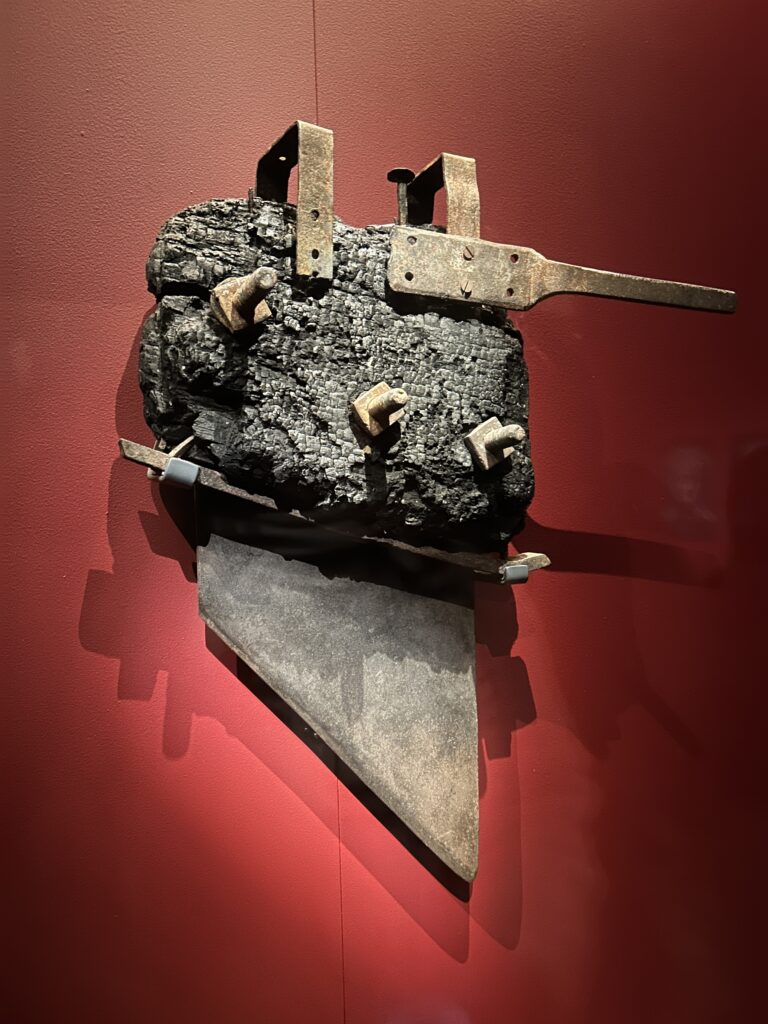
Ultimately Marie Antoinette’s death by guillotine in October 1793 was very much a case of wrong place, wrong time. The last note she wrote, on a blank page in her prayer book was:
“My God, have pity on me! My eyes have no more tears to cry for you my poor children; adieu, adieu!”